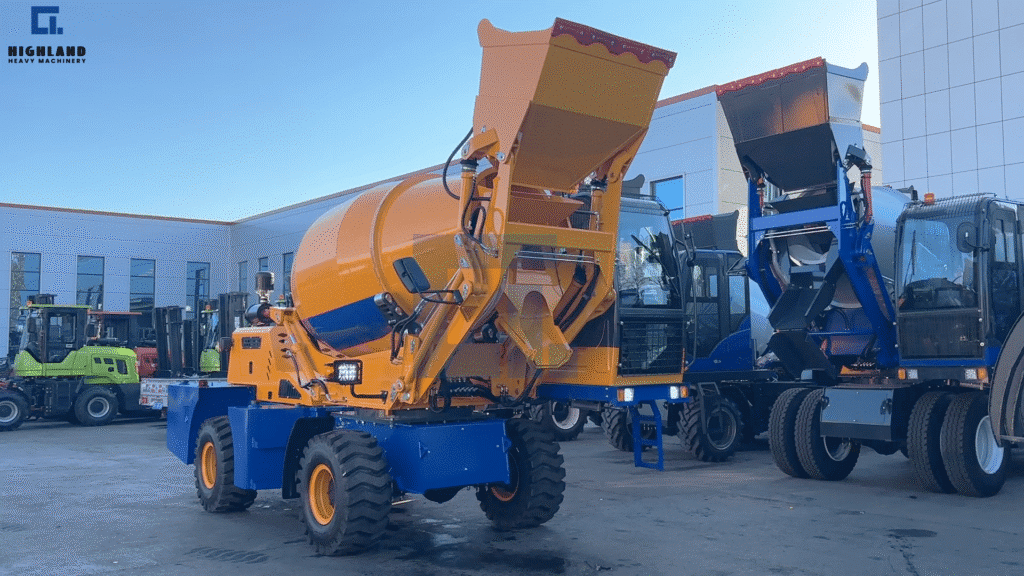
Investing in a self loading concrete mixer truck is a major capital decision for any construction, mining, or agricultural enterprise. Unlike purchasing small hand tools, this piece of heavy machinery will become the backbone of your on-site material production for years to come. A wrong decision can lead to constant breakdowns, logistical bottlenecks, and a severe drain on your project’s profitability. Therefore, knowing exactly how to choose self loading concrete mixer models is a critical skill for any project manager or fleet owner.
Because these machines combine multiple functions—loading, mixing, transporting, and discharging—into a single unit, evaluating them requires a comprehensive approach. It is not just about looking at the price tag. You must analyze the technical specifications, the working environment, and the long-term return on investment. In this comprehensive guide, we will break down the 5 most critical parameters you must evaluate before making a purchase, ensuring you select the perfect workhorse for your specific needs.
Why Making the Right Choice Matters for Your Bottom Line
A self loading concrete mixer truck is essentially a mobile batching plant. If it fails, your entire concrete supply chain stops. If it cannot reach the pour site due to poor terrain, you lose valuable work hours. Conversely, a well-matched machine can eliminate the need for a separate wheel loader, reduce your on-site labor force by half, and drastically cut down on material waste. Understanding the nuances of how to choose self loading concrete mixer equipment is the first step toward maximizing your operational efficiency and ensuring a rapid return on investment.
The 5 Key Parameters for Selecting a Self Loading Mixer
When you are in the market for a new self loading mixer, narrow your focus to these five technical pillars. They are the ultimate indicators of whether a machine will thrive or struggle on your job site.
1. Mixing Drum Capacity and Output
The first and most obvious parameter to evaluate is the capacity of the mixing drum. Self loading mixers typically range from 1.5 cubic meters to 6 cubic meters. The capacity you need directly correlates with the scale of your projects. If you are doing residential foundations and small agricultural projects, a 2.0m³ to 3.0m³ machine is ideal for its maneuverability. However, for large infrastructure projects, commercial buildings, and mining operations, a 4.0m³ or larger model is essential. A 4.0m³ self loading concrete mixer truck hits the market sweet spot, offering a substantial output of 4 cubic meters per batch (roughly 10-15 minutes) while still remaining compact enough to navigate tight, unpaved rural roads.
2. Engine Power and Altitude Adaptability
Do not underestimate the engine. A self loading mixer operates in hostile environments. It needs enough power to drive through mud while carrying tons of wet concrete. More importantly, if your projects take you to high-altitude regions (above 2,000 meters), standard engines will suffer from severe power loss due to thin air. When researching how to choose self loading concrete mixer engines, prioritize models equipped with high-pressure common rail, turbocharged diesel engines. For instance, HIGHLAND machines utilize heavy-duty engines specifically tuned for high-altitude and heavy-duty applications. This ensures consistent torque, better fuel economy (saving up to 15-20%), and reliable starting even in freezing conditions.
3. Chassis Design and Terrain Capability
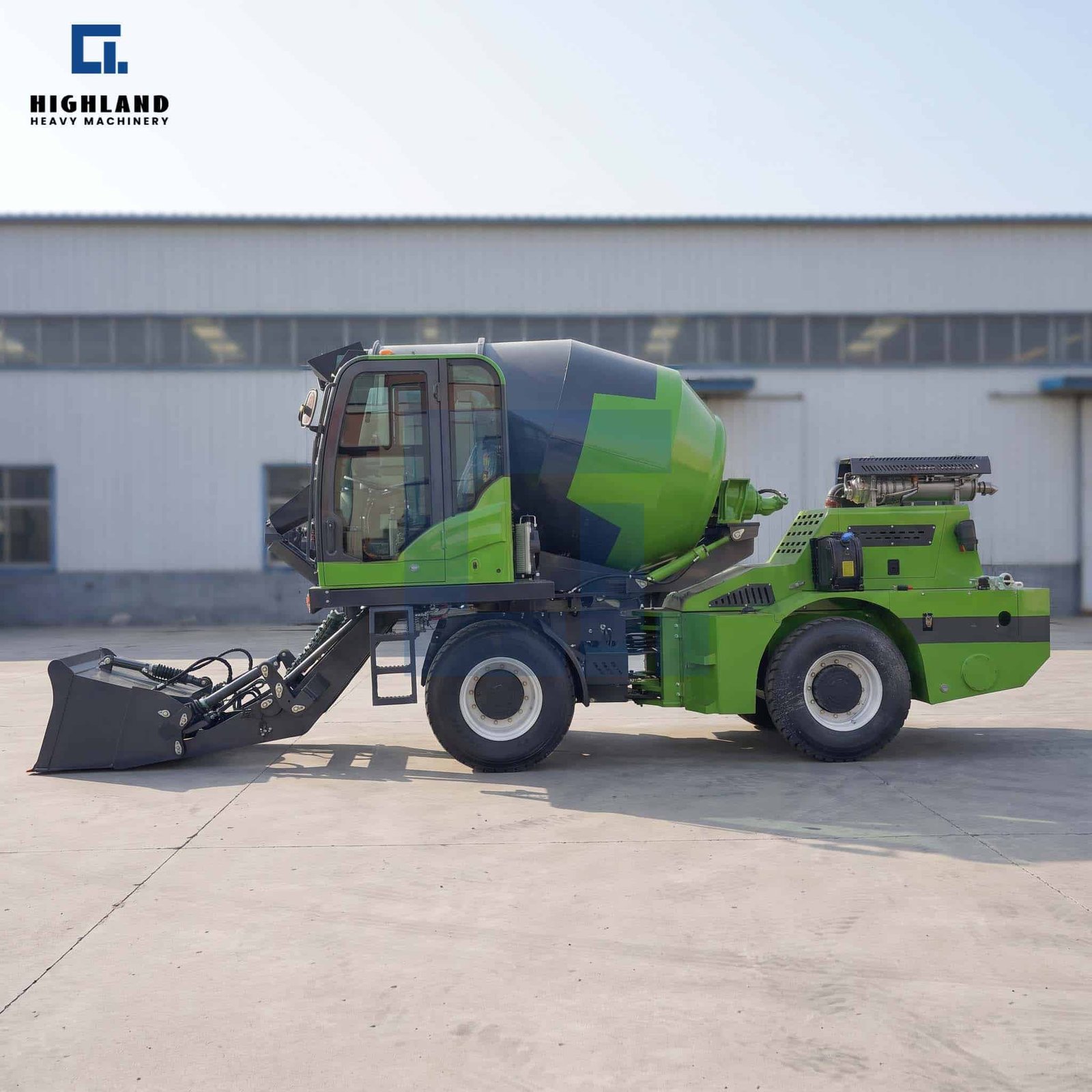
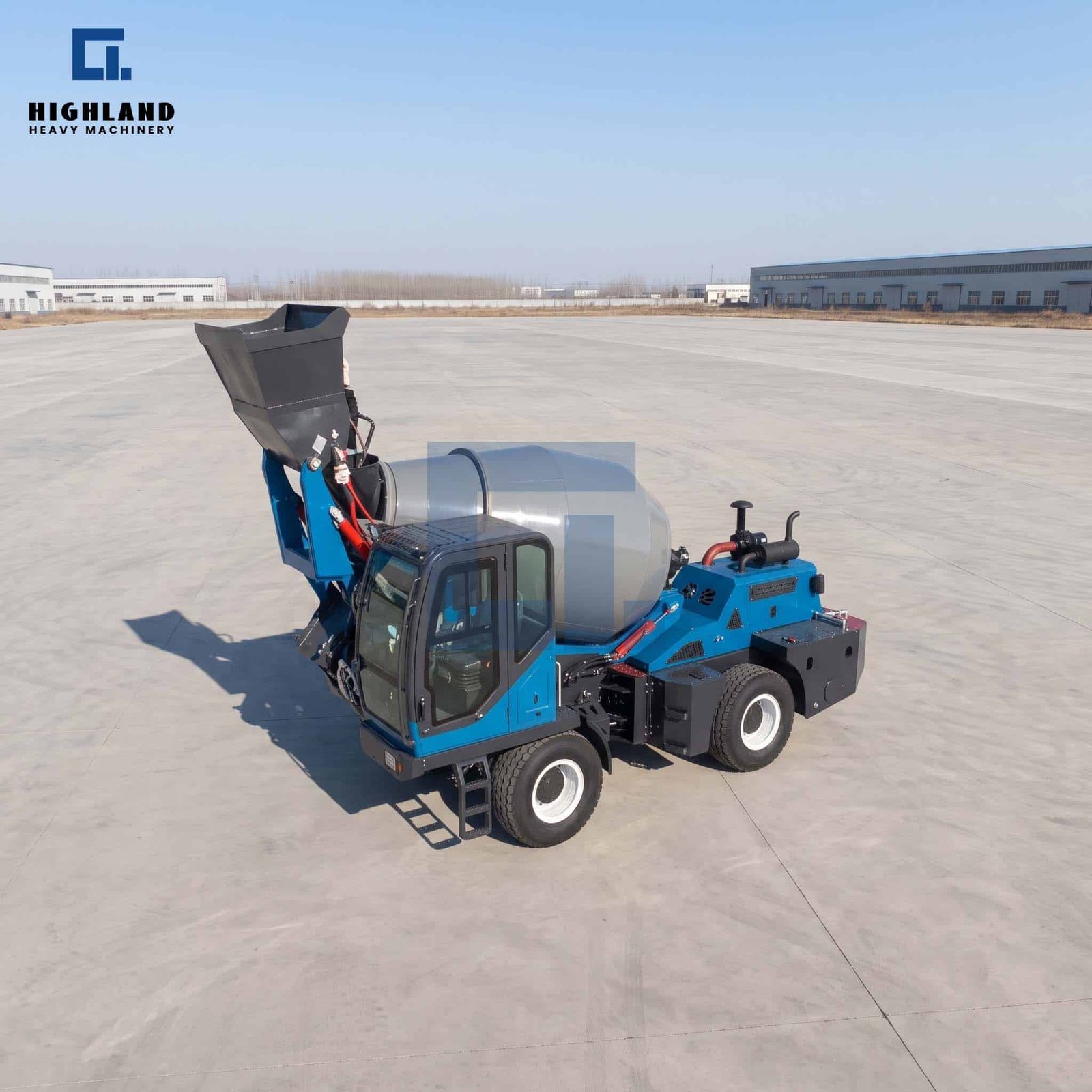
The chassis is the skeleton of the machine and dictates its ability to traverse rough terrains. The most advanced self loading mixers feature an articulated chassis design. This means the front and rear sections can pivot independently, allowing the machine to “snake” around tight corners and navigate uneven ground without lifting wheels off the ground. Furthermore, you must evaluate the drive system. While 2WD is cheaper, a 4WD (four-wheel drive) system is mandatory if you plan to work in muddy paddies, steep mining shafts, or sandy construction sites. Combined with massive heavy-duty tires, a 4WD articulated chassis guarantees maximum traction and flotation, preventing your valuable machine from sinking into the soil.
4. Electronic Weighing System and Batching Accuracy
The core advantage of a self loading mixer is its ability to produce high-quality concrete on-site. This entire process hinges on the accuracy of its batching system. A modern machine must be equipped with an electronic weighing system for aggregates, cement, and water. Cheaper models might use volumetric or “by the bucket” estimates, which leads to inconsistent concrete strength and wasted cement. When you evaluate how to choose self loading concrete mixer equipment, look for models with digital weighing displays and precise load cells. This technology ensures the exact water-cement ratio is maintained for every batch, guaranteeing structural integrity and minimizing material waste.
5. Hydraulic System Performance and Discharge Height
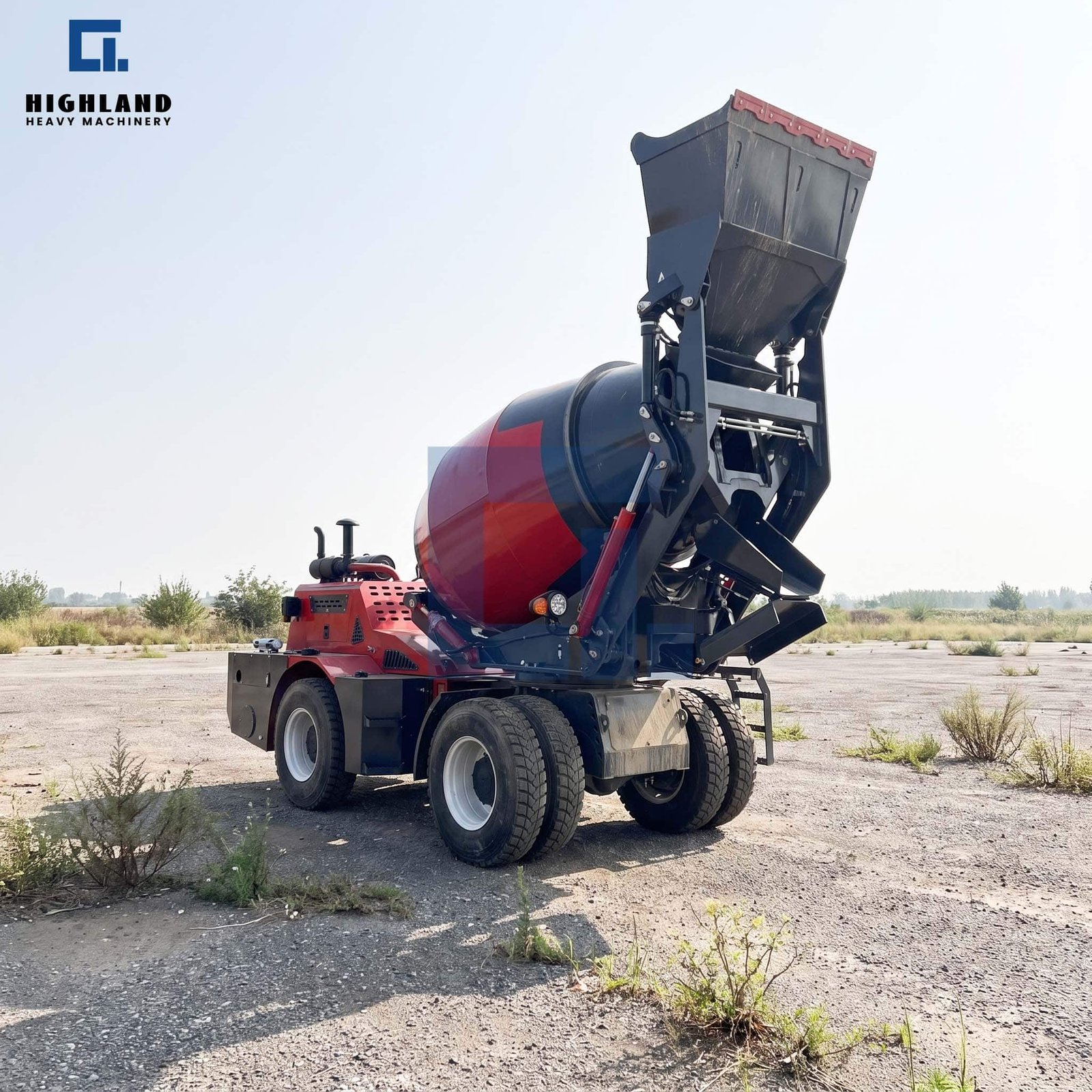
The hydraulic system powers the loading shovel, the rotation of the drum, and the discharge chute. A high-performance hydraulic system ensures fast, thorough mixing and smooth operation. Pay attention to the torque converter and the hydraulic pump specifications. For example, the 265 dual high-and-low speed torque converter found in our HIGHLAND machines provides seamless power delivery and eliminates the risk of stalling under heavy load. Additionally, evaluate the maximum discharge height. The standard range is 4 to 6 meters. If you need to discharge directly into tall dump trucks or hoppers, ensure the machine you choose meets those specific height requirements.
Additional Factors to Consider After the Technical Specs
While the five parameters above are the technical core, a successful purchase goes beyond just the iron and steel. You must also evaluate the manufacturing source and the long-term support structure.
Factory Direct vs. Third-Party Resellers
Buying from a trade-manufacturing integrated enterprise, like HIGHLAND Heavy Machinery, offers distinct advantages. You cut out the middleman markup, getting premium equipment at a true factory-direct price. More importantly, you gain direct access to the engineering team for customizations. Need a specific paint color, a specialized high-altitude engine, or an extra hydraulic crane attachment? A factory has the flexibility to build it for you.
Spare Parts Availability and After-Sales Support
Heavy machinery will eventually need maintenance. A machine is only as good as the parts supply behind it. Before you finalize your decision on how to choose self loading concrete mixer brands, inquire about their global spare parts network and technical support responsiveness. An extended period of downtime waiting for a simple hydraulic hose can cost you more than the initial purchase price of the machine.
Why HIGHLAND Heavy Machinery is Your Ideal Partner
At HIGHLAND Heavy Machinery, we have spent decades perfecting the engineering behind our self loading concrete mixer trucks. As a globally recognized manufacturer, we understand the diverse challenges of construction sites worldwide. Our machines feature robust articulated chassis, high-performance diesel engines, and advanced electronic weighing systems. Every unit undergoes rigorous testing, including full-load climbing and hydraulic pressure checks, before it leaves our factory. By choosing HIGHLAND, you are not just buying a machine; you are investing in a partnership dedicated to your project’s success.
Conclusion: Make an Informed Investment
Learning how to choose self loading concrete mixer equipment is a process of balancing your project’s specific terrain, required output, and budget. By focusing on the five key parameters—drum capacity, engine power, chassis capability, weighing accuracy, and hydraulic performance—you can confidently select a machine that will serve as the reliable backbone of your concrete production for years.
Ready to take the next step? Contact HIGHLAND Heavy Machinery today for a customized quote. Our team of experts is ready to help you match the perfect self loading concrete mixer truck to your exact working conditions. Let’s build the future together, one efficient pour at a time.